Where did Zoë come from?
Zoë’s gestation has been long, conceived as an angel she slowly revealed her true nature.
Zoë doesn’t like to be in lockdown but she has adapted to over 250 days of it in three distinct periods of time.
1/ Lockdown 2, July 8 – Oct 27, 2020
2/ Between Lockdowns 3 & 4, February 18 – May 26 2021
3/ Lockdown 6, July 28 . . . (see more detail in Time as Table)
Zoë needs to be understood in this context.
Zoë’s coming out has been thwarted by the Covid-19 pandemic and lockdowns in Melbourne, (the feral is always affecting public space),[1] she has twisted and turned to accommodate the circumstances, I am grateful for her astonishing flexibility, the splits are nothin’!
We (AGC) are interested in the investigation of embodied themes such as feminism, intergenerational solidarity and our concern with the correlation between neoliberalism and the environmental crisis. Our acrobatic practice cultivates collaboration, and connects us to a broader community of practice in circus and physical theatre. We have coined the term ‘Arthouse Circus’ because we experiment with the circus form to push against the structures and codes that define it and the markets that attempt to contain it. We are influenced by arthouse cinema, performance art and contemporary performance/ theatre. However it would be remiss of me to forget the influence of Circus Oz in Melbourne in the 70s[2] and the many circus and physical theatre styles it spawned. Two of these Australian companies; Legs on The Wall[3] and ‘acrobat’[4] continue to inspire our practice along with Cirque Isi, France, and Forced Entertainment U.K.

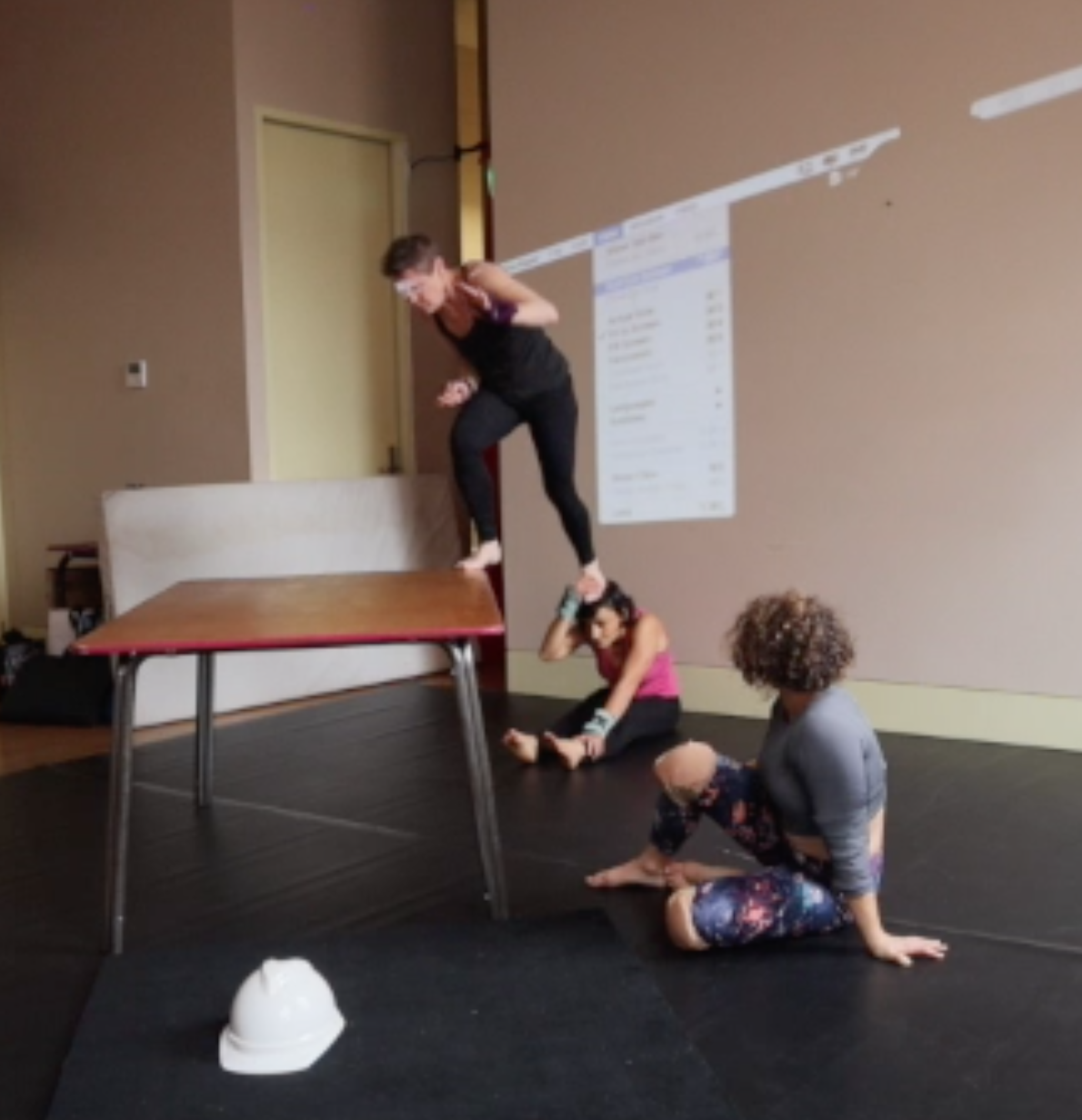

As for me, I began this MA of Art in Public Space as lockdown 2 began. In fact, lockdown created the space for this postgraduate study, it had been on my bucket list for some time. Curious about examining my performance practice through a new lens (other than the performing arts) because I am attracted to the idea of the commons, and the sharing of ideas, spaces and practices particularly those that disrupt the commodification of art and artist. I am partial to reinventions, and this was opportune, it seemed the right time to dive in, a little rush toward something and slightly impulsive. As Stewart describes it,
“Everyday life is a life lived on the level of surging affects, impacts suffered or barely avoided. It takes everything we have. But it also spawns a series of little somethings dreamed up in the course of things.”[5]
Lockdowns afford new opportunities, my already promiscuous practice expands to include the digital public realm. The necessity of sharing work on-line insists I cultivate some digital video-making skills. Initially reluctant, I am not a digital native and the screen does not ordinarily pull me toward it. I surprise myself with a playful video practice as I learn about the tools in imovie. Zoë vibrates within bodies and on screens during this time, she is spoken of and plans for her becoming are mapped while resources to nurture and sustain her are sought.
Between lockdowns, Zoë is blossoming as an assemblage of movement sequences, text, and design; sound, projected image, and costume are all vibrating with each other, unsettled, responsive, emergent. There is enormous output in this time of double donut conditions. (no new cases of Covid -19 and no deaths).
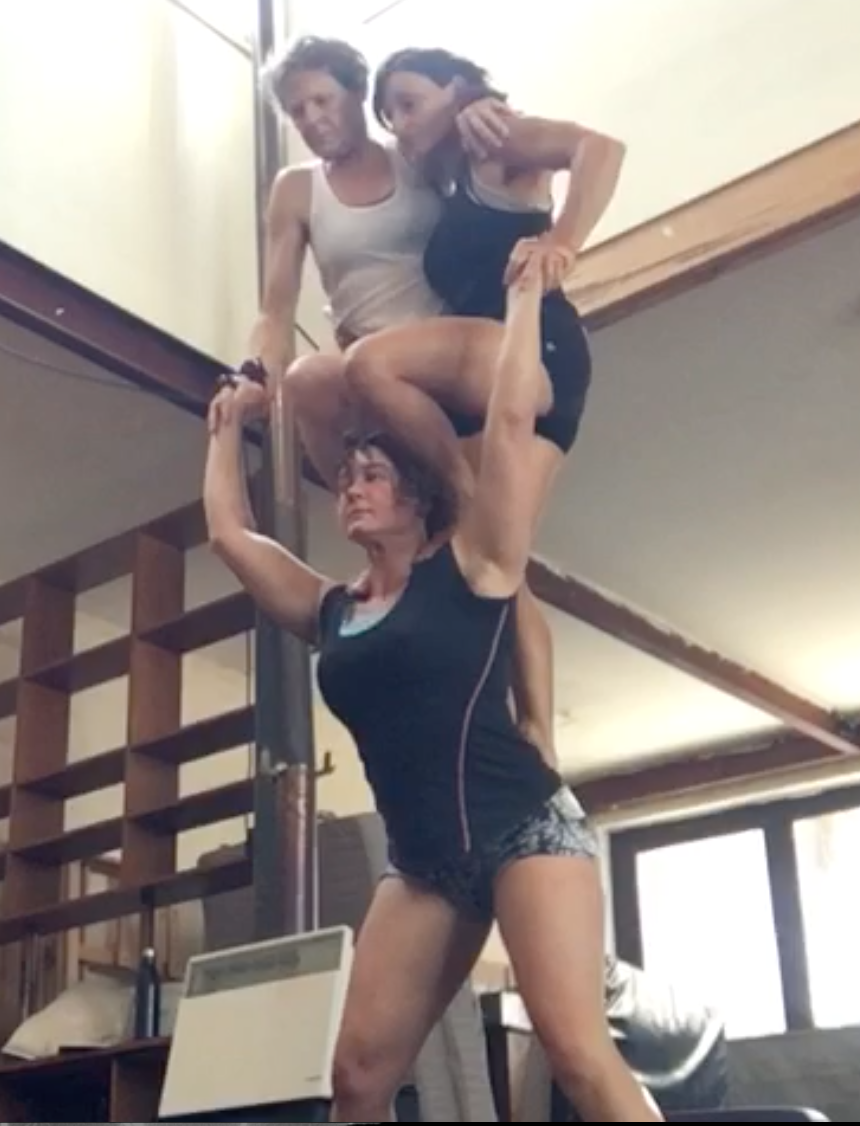

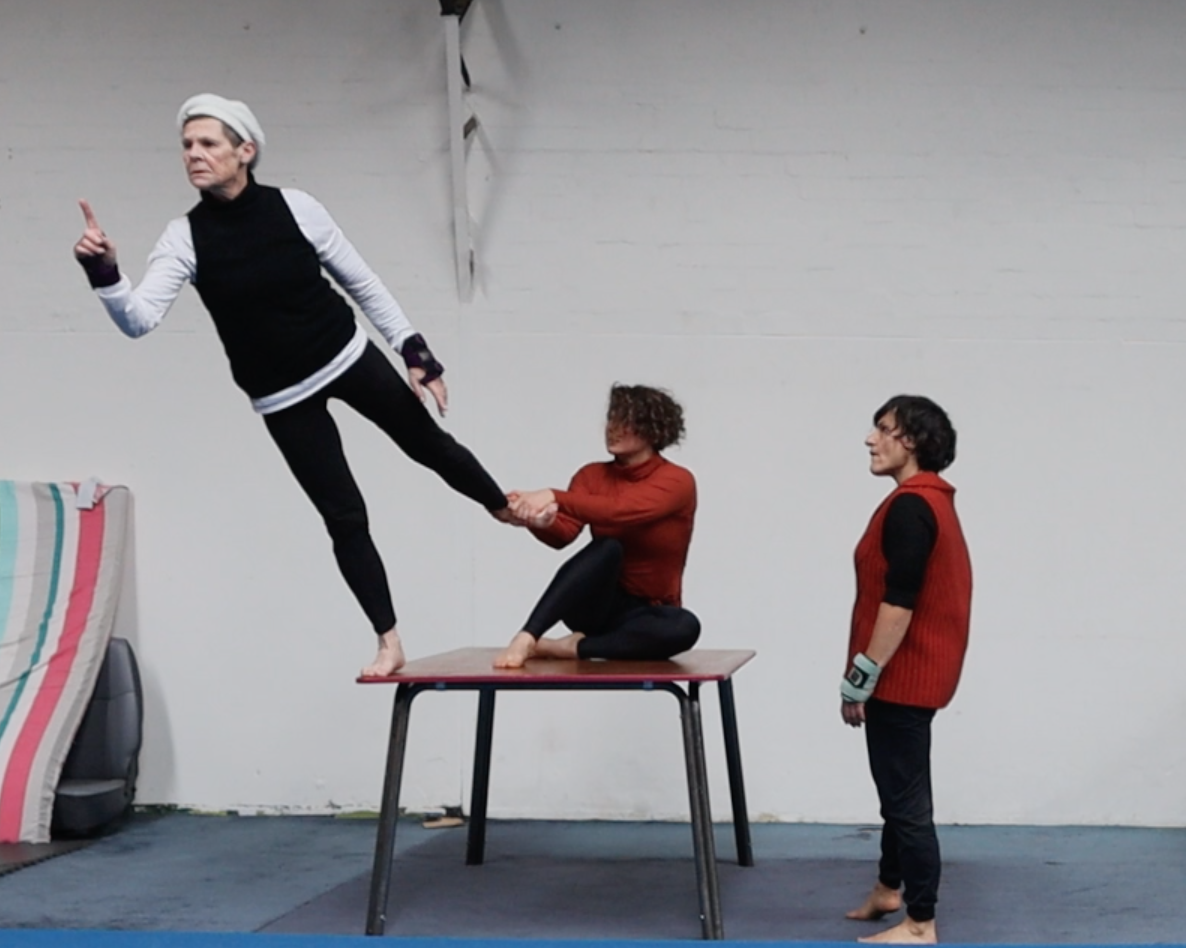
Zoë has momentum, she is determined and challenging, funny and unsettling until. . .
Lockdown 6, We meet online, we set creative tasks and we make with what is at hand we give Zoe other ways of being, other materialities. She is multiple, the urge to survive surpasses all limitations.
Zoë is posthuman, made with our relational, affective, embodied and embedded knowledges.[6] I have re invoked my digital practice as we continue to breathe life into her albeit in digital forms.
The work conveys time, embodied cognition, presence and absence as the relational becomes a blurring of boundaries between the human and non-human.
Initially intended as a live performance for 2020, Zoe was rescheduled to perform in the ‘Quilt Room’ at the Trades Hall in the Melbourne Fringe Festival 2021 (also postponed). This venue was chosen due to its history as a union movement dedicated to making things better (for humans). The Quilt room, because it celebrates the making practices historically attributed to women and because it is a performance space that’s far too small for circus. Zoë wants to be close, to get under the skin and to draw the room in. Zoe is for public apprehension because she is of public interest.[7]
This work can also exist in the Performing Arts, however, I do not want to get bogged down by definitions in this research, there is too much to do. I am reminded of the Situations Manifesto “Don’t waste time on definitions. Is it sculpture? Is it visual art? Is it performance? Who cares. There are more important questions to ask. Does it move you? Does it shake up your perceptions of the world around you, or your backyard? Does it make you curious to see more?” [8]
“Break The Rules”[9]
Footnotes
[1] Tsing, Anna L., Jennifer Deger, Alder Keleman Saxena, and Feifei Zhou. Feral Atlas: The More-Than-Human Anthropocene, Redwood City: Stanford University Press 2021, http://doi.org/10.21627/2020fa accessed 24/7/21
[2] Hawkes, Jon. Circus Oz, Circopedia Circus Oz – Circopedia
Contemporary circus in Melbourne in the 70s caused a rupture in the hierarchies of performing arts paradigms, the work appropriated and re-invented the traditional circus to reflect the times, celebrating collaborative interdisciplinary processes.
[3] https://www.legsonthewall.com.au/home
[4] https://www.acrobat.net.au/about
[5] Stewart, Kathleen. Ordinary Affects. North Carolina: Duke University Press, 2007. P9, Accessed August 10, 2021. ProQuest Ebook Central.
[6] Baidotti, Posthuman Knowledge 18
[7] Phillips, Patricia C. “Temporality and Public Art.” Art Journal 48, no. 4 (1989): 331-35. Accessed August 7, 2021. doi:10.2307/777018.
[8] Situations Manifesto The_new_rule_of_public_art.pdf
[9] Doherty Clare. The Melbourne Principles, New Rules for Public Art
 In the Middle of Zoë